Sphenoid Sinus Problems: Why Can They Cause Deep Headaches?
Introduction: Understanding Deep Headaches
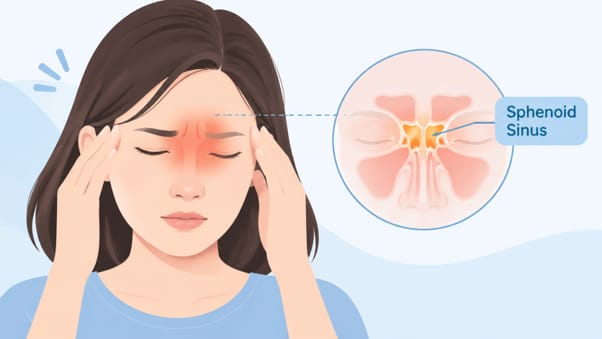
A headache that feels like it comes from behind the eyes or deep inside the head can be hard to explain. Migraine and other headache conditions are common possibilities, but problems involving the sphenoid sinuses may sometimes be responsible.
Unlike the sinuses near the cheeks or forehead, the sphenoid sinuses sit further back in the skull. When they become inflamed or develop another problem, headache may be the main complaint, even without a noticeably blocked nose.
Understanding how this happens can help people recognise when a medical assessment is worthwhile.
What Are the Sphenoid Sinuses?
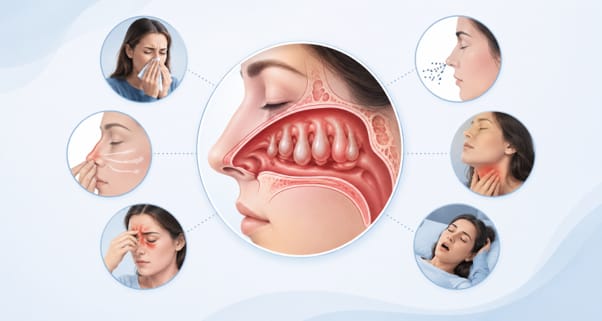
The sphenoid sinuses are two air-filled spaces located deep behind the nose, roughly behind the eyes. They are part of the sinus system, which has a thin lining that produces mucus to trap particles and keep the passages moist.
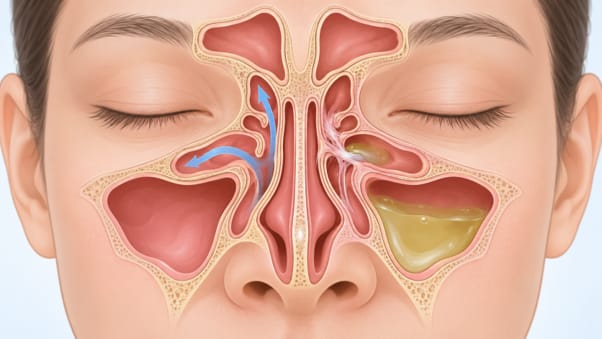
Normally, mucus passes through small openings into the nose. If the lining swells or an opening becomes obstructed, normal drainage may be affected.
The sphenoid sinuses also lie close to nerves, blood vessels and structures involved in vision, which is why problems in this area need careful assessment.
Why Can Sphenoid Sinus Problems Cause Deep Headaches?
Inflammation and Changes in Drainage
Inflammation can cause the sinus lining to swell and make it harder for mucus to drain. Mucus may collect, sometimes alongside an infection, and the inflamed tissues can stimulate nerves that carry pain signals.
This does not mean every headache is caused by trapped mucus or increasing pressure. Pain depends on several factors, including the underlying condition and how nearby nerves respond to inflammation.
Why Pain May Be Felt Behind the Eyes or Elsewhere
The nerves serving the sphenoid region also connect with wider pain pathways in the head. As a result, a sphenoid-related headache may be felt behind the eyes, near the top of the head, towards the back of the head or across a wider area.
Some people describe a dull, persistent ache; others experience more intense pain. Neither the location nor the strength of the headache is enough to identify sphenoid sinus disease without further assessment.
What Causes Sphenoid Sinus Problems?
Sphenoid Sinusitis
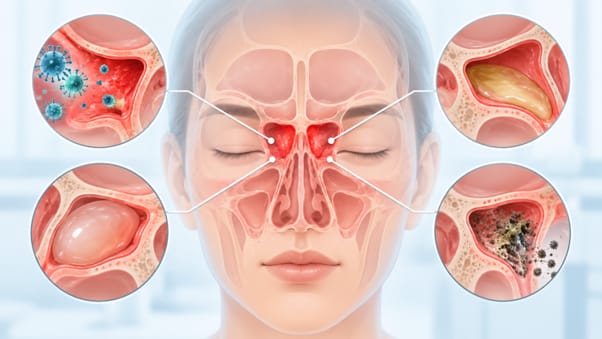
Sphenoid sinusitis means inflammation of the lining inside one or both sphenoid sinuses. It may occur with inflammation elsewhere in the sinuses or, less commonly, affect the sphenoid sinus on its own.
A viral illness can trigger sinus inflammation, while some cases involve bacterial infection. Persistent swelling or poor drainage may contribute to ongoing symptoms, but not every inflamed sinus is infected with bacteria.
Mucus-Filled Cysts and Other Conditions
A mucocele is a mucus-filled, enclosed swelling that can develop when drainage is blocked over time. As it expands, it may affect surrounding structures and requires specialist evaluation.
Less commonly, fungal disease, polyps or other growths may involve the sphenoid sinus. These conditions are not interchangeable, so identifying the actual cause matters more than treating all sphenoid problems as routine sinus infections.
What Symptoms Can Accompany a Sphenoid Sinus Headache?
Headache can be the most noticeable symptom. Depending on the cause, other symptoms may include:
- Pain around or behind the eyes: Discomfort may occur alongside a deeper headache.
- Mucus draining down the throat: Some people notice postnasal drip or nasal discharge.
- Fever: This may develop with an acute infection.
- Nasal congestion: Blockage can occur, although it may be absent.
- Changes in eyesight: Occasionally, double vision or other visual disturbances may occur.
Can It Happen Without a Blocked Nose?
Yes. Because the sphenoid sinuses lie deep within the skull, inflammation there may not produce the familiar cheek pressure or heavy nasal blockage associated with other sinus problems.
However, a headache without nasal symptoms is far more often due to something else. The absence of congestion does not rule out sphenoid disease, but it does not make the diagnosis more likely on its own.
Is a Deep Headache Always a Sinus Headache?
No. Migraine, tension-type headaches and other conditions can produce pain that feels deep or centred around the eyes. Some migraines also cause watery eyes or nasal symptoms, which may make them seem sinus-related.
Doctors therefore consider the timing, pattern and associated features of the headache. If a scan shows mild sinus lining thickening, that finding alone does not prove it is causing the pain; the scan must be considered alongside the clinical picture.
When Should You Seek Medical Attention?
Arrange a medical assessment if a headache is persistent, keeps returning, is becoming more troublesome or occurs alongside ongoing sinus symptoms. A sinus specialist can assess whether an ENT examination, headache evaluation or another investigation is appropriate.
Warning Signs That Require Urgent Attention
Seek urgent medical attention if you experience:
- A sudden, extremely severe headache.
- New double vision, blurred vision or loss of vision.
- Eye swelling or severe pain around the eye.
- A severe headache with fever and a stiff neck.
- Confusion, weakness or rapidly worsening symptoms.
These signs do not necessarily mean a sphenoid sinus complication is present. They can, however, indicate serious conditions that should not be assessed through a routine appointment.
How Does an ENT Specialist Investigate Sphenoid Sinus Problems?
Reviewing Symptoms and Examining the Nose
The assessment usually begins with questions about how the headache started, where it occurs, and whether there are fever, nasal symptoms or changes in vision. Previous sinus problems, medical conditions, and treatments are also relevant.
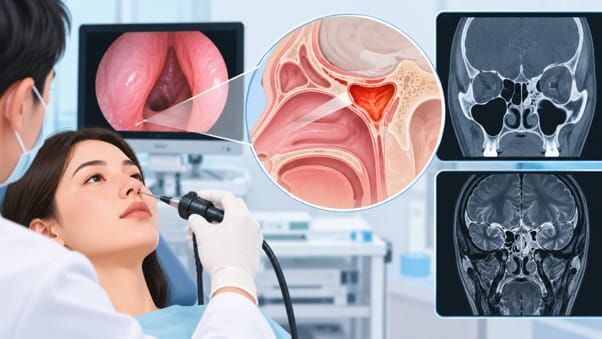
An ENT specialist may perform nasal endoscopy, using a thin camera to look inside the nose for swelling, discharge, or unusual tissue.
The sphenoid sinus itself is not fully visible during this examination, so an apparently normal result does not always exclude a problem deeper inside.
When Are CT or MRI Scans Used?
A CT scan provides detailed images of the sinuses and can help show inflammation, trapped material, blocked drainage pathways, or changes in nearby bone. It may be considered if symptoms or examination findings raise concern about disease in the sphenoid sinus.
MRI may be helpful when doctors need to assess a suspected growth or possible involvement of neighbouring tissues.
Imaging is not necessary for every headache, and an abnormal-looking sinus on a scan must be interpreted in context.
How Are Sphenoid Sinus Problems Treated?
Medication and Symptom Management
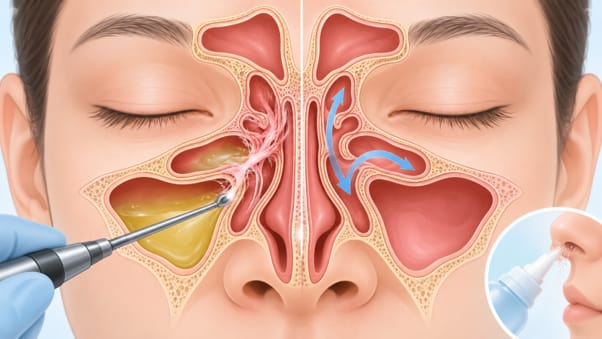
Treatment depends on whether the underlying problem is inflammation, bacterial infection or another condition. Depending on the assessment, options may include pain relief, saline nasal rinses, and prescribed steroid nasal sprays to reduce associated inflammation.
Antibiotics may be necessary for bacterial sphenoid sinusitis, particularly when the infection is significant. They are not useful for every cause of sinus inflammation, and suspected severe infection requires prompt medical assessment rather than self-treatment.
When Might Surgery Be Considered?
For certain persistent infections, mucoceles, fungal disease, or complications, a sinus surgeon may recommend endoscopic sinus surgery.
This involves passing a camera and instruments through the nostril to reach the sphenoid sinus and improve drainage or treat the underlying problem.
Surgery is not required for everyone with a headache or an abnormal scan. The decision depends on the diagnosis, severity, examination findings and response to appropriate treatment.
Frequently Asked Questions
Can Sphenoid Sinusitis Cause Headaches Without Nasal Congestion?
Yes. Some people with sphenoid sinusitis have headaches without obvious nasal blockage or discharge. Other headache causes still need to be considered.
Where Is a Sphenoid Sinus Headache Usually Felt?
Pain may be felt behind the eyes, at the top of the head or towards the back of the head. Its location varies and cannot confirm the cause.
Can a CT Scan Confirm a Sphenoid Sinus Problem?
A CT scan can show changes in the sphenoid sinus, but doctors must decide whether those changes explain the symptoms. Further examination or testing may sometimes be needed.
Do All Sphenoid Sinus Infections Need Antibiotics?
Not every sphenoid sinus problem needs antibiotics. Treatment depends on the cause and severity, although suspected bacterial sphenoid sinusitis may require prompt antibiotic treatment and specialist assessment.
Can Sphenoid Sinus Problems Affect Eyesight?
Occasionally, conditions in the sphenoid sinus can affect nearby structures involved in vision. New visual changes require urgent medical attention.
Conclusion
Sphenoid sinus problems are an uncommon but important consideration when investigating deep headaches. Their symptoms can be difficult to recognise, and a headache alone is not enough to confirm the diagnosis.
If symptoms persist or a sinus-related cause is suspected, consulting a sinus specialist in Singapore can help determine whether the sphenoid sinus is involved and guide appropriate care.
Seek urgent medical attention for a sudden, severe headache, changes in vision, or neurological symptoms such as weakness, confusion, or difficulty speaking.
Sphenoid Sinus Problems: Why Can They Cause Deep Headaches? Read More »