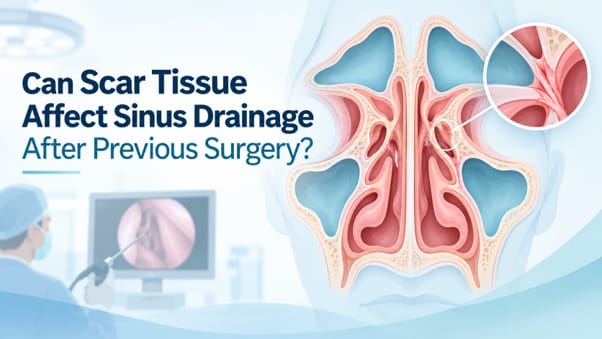
Introduction: Can Scar Tissue Affect Sinus Drainage After Surgery?
Sinus surgery is often performed to improve drainage and relieve persistent sinus problems. However, some people find that symptoms such as nasal blockage, facial pressure, or recurring sinus infections return after their initial recovery.
One possible explanation is scar tissue that develops during healing. Although some scarring is a normal response to surgery, it can occasionally narrow the openings through which mucus drains from the sinuses.
Does this mean that returning symptoms are always caused by scar tissue? Not necessarily. Understanding how postoperative scarring affects sinus drainage can help patients recognise when further assessment may be needed.
What Is Scar Tissue After Sinus Surgery?
Scar tissue forms when the body repairs areas affected by injury or surgery. During sinus surgery, delicate tissue inside the nose is carefully moved or removed to improve access to blocked sinus passages.
As these areas heal, new tissue develops. Occasionally, this healing process can produce scar tissue that interferes with the normal structure of the nasal passages.
How Do Nasal Adhesions Develop?
Nasal adhesions are bands of scar tissue that form between surfaces inside the nose that would normally remain separate.
They may develop when healing surfaces come into contact following surgery. Depending on their location, these adhesions can restrict space inside the nasal cavity or interfere with nearby sinus openings.
Does All Scar Tissue Cause Problems?
Not all postoperative scarring is harmful. Small areas of scar tissue may have little or no effect on breathing or sinus drainage.
Problems are more likely when scarring develops around important drainage openings or creates an obstruction. The location and extent of the scar tissue are therefore important considerations.
How Can Scar Tissue Affect Sinus Drainage?
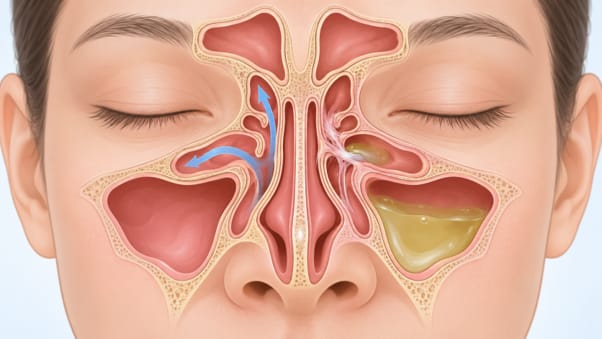
The sinuses are air-filled spaces within the bones around the nose, cheeks, and forehead. They produce mucus that normally passes through small openings into the nasal cavity.
Sinus surgery aims to improve these drainage pathways, particularly when inflammation or other obstructions prevent mucus from flowing normally.
Narrowing of Sinus Openings
Scar tissue may form near an opening that was widened during surgery. As healing progresses, the tissue can sometimes narrow the passage again.
When drainage becomes restricted, mucus may accumulate inside the affected sinus. This can contribute to ongoing inflammation and may increase the likelihood of recurring sinus problems.
For example, scarring near the drainage opening of a frontal sinus, located behind the forehead, may interfere with mucus clearance from that area.
Adhesions That Change the Drainage Pathway
Adhesions can also connect nearby surfaces, changing the space available for airflow or mucus drainage.
Not every adhesion affects the sinuses directly. However, those forming close to important drainage pathways may contribute to obstruction.
Why Might Symptoms Return After Initial Improvement?
Some patients experience relief following surgery but notice symptoms returning weeks or months later.
This may happen if healing leads to narrowing of a previously opened drainage pathway. However, returning symptoms can also result from inflammation or other sinus conditions, so scarring should not be assumed without examination.
What Symptoms May Suggest Scar Tissue Is Affecting Sinus Drainage?
Scar tissue does not produce symptoms that are unique to postoperative scarring. Instead, patients may experience problems similar to those associated with sinusitis or nasal obstruction.
Possible symptoms include:
- Persistent nasal blockage: A feeling that one or both sides of the nose remain obstructed.
- Facial pressure or discomfort: Pressure around the forehead, cheeks, or eyes, particularly when sinus drainage is affected.
- Recurring sinus infections: Repeated episodes of sinus inflammation or infection despite previous treatment.
- Thick nasal mucus: Mucus that remains in the nose or drains down the back of the throat.
- Reduced sense of smell: Difficulty detecting smells, sometimes associated with ongoing inflammation or obstruction.
These symptoms do not automatically indicate scar tissue. Their timing, severity, and relationship to previous surgery all help guide further assessment.
Is Scar Tissue the Only Reason Sinus Symptoms Return?
Although postoperative scarring can affect drainage, it is only one possible explanation for recurring sinus symptoms.
Other causes include:
- Persistent inflammation: The sinus lining may remain swollen even when surgical openings are adequately widened.
- Recurring nasal polyps: These soft, non-cancerous growths can return and contribute to obstruction.
- Residual sinus disease: Some areas may continue to experience inflammation or blockage after the original operation.
More than one factor can also be present. For example, a narrowed drainage pathway may coexist with persistent swelling, making it important to assess the underlying causes rather than symptoms alone.
How Does an ENT Specialist Check for Scar Tissue After Sinus Surgery?
Determining whether scar tissue is affecting drainage involves reviewing the patient’s medical history and examining the nose and sinuses.
Reviewing Previous Surgery and Symptoms
The specialist may ask about the original operation, recovery experience, and when symptoms returned.
Previous surgical records and scans can also help identify which areas were treated and whether changes have developed since the procedure.
Nasal Endoscopy
Nasal endoscopy involves gently passing a thin viewing instrument into the nose to examine its internal structures.
This allows the specialist to look for visible scar bands, narrowing, swelling, nasal polyps or abnormal mucus. It can also help assess how the previously operated areas have healed.
CT Scan of the Sinuses
A CT scan provides detailed images of the sinus cavities and surrounding structures.
It may help reveal blocked drainage pathways, retained mucus, or ongoing sinus inflammation that cannot be fully assessed during a nasal examination.
Not every patient needs a scan. The decision depends on symptoms, examination findings, and whether additional imaging would help guide management.
Can Scar Tissue Affecting Sinus Drainage Be Treated?
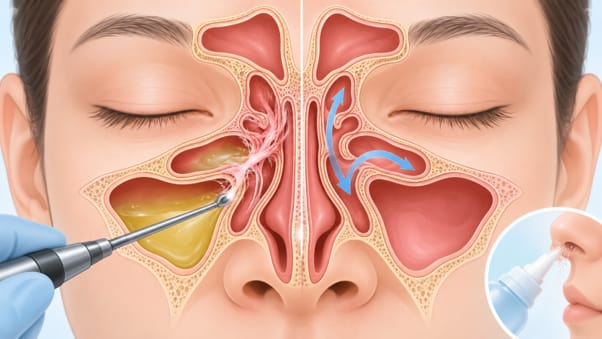
Treatment depends on the degree of obstruction, the symptoms experienced, and whether other conditions are contributing to the problem.
Non-Surgical Management
When symptoms are mild, or inflammation is a significant factor, an ENT specialist may recommend measures such as:
- Saline nasal rinses to help clear mucus and crusting.
- Prescribed nasal steroid sprays or rinses to reduce inflammation.
- Follow-up examinations to monitor symptoms and changes inside the nose.
These treatments may improve mucus clearance and control inflammation. However, they do not necessarily remove established scar bands causing a physical obstruction.
When Might Revision Sinus Surgery Be Considered?
If significant scar tissue blocks drainage and symptoms continue despite appropriate treatment, revision sinus surgery may be considered.
This procedure may involve carefully releasing obstructing adhesions or reopening narrowed sinus passages.
Revision surgery can be more complex because previous operations may have changed the normal anatomy. In selected cases, image-guided technology may help the surgeon navigate these areas.
The decision to operate depends on clinical findings, symptom severity, and the expected benefits and risks. Many patients with recurring symptoms do not require another operation.
Can Postoperative Care Help Reduce Scar-Related Problems?
Appropriate care after sinus surgery helps support healing and allows potential complications to be identified.
Patients may be advised to:
- Attend follow-up appointments: Regular reviews allow the surgeon to assess healing and identify developing adhesions.
- Use prescribed saline rinses: These help remove mucus, dried blood, and crusting from the nasal passages.
- Follow medication instructions: Prescribed treatments may help control inflammation during recovery.
- Avoid disturbing healing tissue: Follow instructions about nose blowing, strenuous activity, and other postoperative precautions.
Sometimes, the surgeon may also remove crusting or debris during follow-up examinations.
Although these measures support recovery, they cannot eliminate every possibility of scar formation.
When Should You See an ENT Specialist After Previous Sinus Surgery?
Some congestion and discomfort are expected during the early stages of recovery. However, symptoms that persist, return after initial improvement, or become progressively worse deserve further assessment.
Arrange a medical review if nasal blockage, facial pressure, or recurring sinus infections continue despite recommended treatment.
Seek urgent medical attention for severe or rapidly worsening headaches, new vision changes, significant swelling around the eyes, confusion, heavy bleeding, or breathing difficulty. These symptoms may indicate complications or other serious conditions requiring prompt assessment.
Frequently Asked Questions
Can Scar Tissue Develop Months After Sinus Surgery?
Scar tissue forms as the operated areas heal and can continue to change over time. Narrowing may become noticeable later, although symptoms developing months after surgery can have other causes.
Can Scar Tissue Cause Sinus Infections After Surgery?
Scar tissue that significantly obstructs sinus drainage may contribute to mucus retention and recurring sinus inflammation or infection. However, infections after surgery are not always caused by scarring.
Can Nasal Endoscopy Detect Scar Tissue?
Yes. Nasal endoscopy can help an ENT specialist identify visible scar tissue, adhesions, and narrowing inside the accessible nasal passages.
Can Scar Tissue Inside the Nose Go Away Without Surgery?
Some healing tissue changes as recovery progresses. However, established adhesions causing significant physical obstruction may not resolve with medication alone.
Does Recurring Sinus Blockage Mean Another Operation Is Needed?
No. Recurring blockage may result from inflammation, polyps, or other conditions. Treatment decisions depend on the underlying cause and findings from an ENT assessment.
Conclusion
For patients in Singapore, persistent sinus symptoms after surgery can raise concerns about recovery and whether another procedure is needed. Scar tissue can sometimes narrow the sinus drainage pathways, contributing to blockage, mucus build-up, or recurring symptoms.
However, scarring is not always the cause, and further surgery may not be necessary. If your symptoms are not settling, a sinus surgeon or an ENT doctor can review your surgical history and examine your sinuses to identify the cause.
This assessment helps guide treatment suited to your condition, whether that involves ongoing medical care or consideration of further surgery.